Quick answer: An irrigation maintenance plan is a recurring service agreement that may bundle spring startup, in-season tune-ups, and fall winterization, with visit frequency based on system size, use, and site conditions. It can help North Jersey homeowners and businesses identify problems early and prepare their systems for freezing weather.
Key takeaways
- Most irrigation maintenance plans combine spring startup, a mid-season tune-up, and fall winterization into one scheduled annual agreement.
- New Jersey law requires automatic lawn sprinkler systems installed after September 2000 to have a working rain sensor or smart sprinkler, per state statute C.52:27D-123.13.
- Annual sprinkler maintenance plan costs vary with system size, visit frequency, and included services.
- Clay-heavy soil can contribute to slow drainage, while water left in irrigation components can freeze and damage pipes, valves, and backflow preventers.
- Commercial properties generally need more frequent checks than residential systems because of larger zone counts and higher liability around water use and site drainage.
What Is an Irrigation Maintenance Plan?
An irrigation maintenance plan is a standing agreement with a licensed irrigation contractor to service your sprinkler system on a recurring schedule, instead of calling only when something breaks. The plan typically bundles the seasonal visits every system needs anyway: a spring startup, one or more in-season check-ups, and a fall winterization.
The appeal is simple. A sprinkler system is mostly buried and easy to ignore until a valve fails, a zone floods, or a pipe cracks after a hard freeze. A maintenance agreement puts those checkpoints on a calendar so small issues get caught before they turn into a dead lawn or a wet foundation.
For homeowners and property managers across Bergen, Passaic, Morris, and Essex counties, this matters more than it might in milder climates. Our region’s clay-heavy soil drains slowly and holds moisture around buried lines, and the freeze-thaw swings each winter put real pressure on pipes and backflow devices. A service schedule should account for those local soil and weather conditions rather than follow a generic national calendar.
How Often Should a Sprinkler System Be Serviced?
Most residential systems need service at least twice a year: once in spring to reactivate the system and once in fall to winterize it. Angi notes that irrigation companies generally recommend at least one inspection a year, with many homeowners opting for two visits at the start and end of the growing season for added peace of mind.
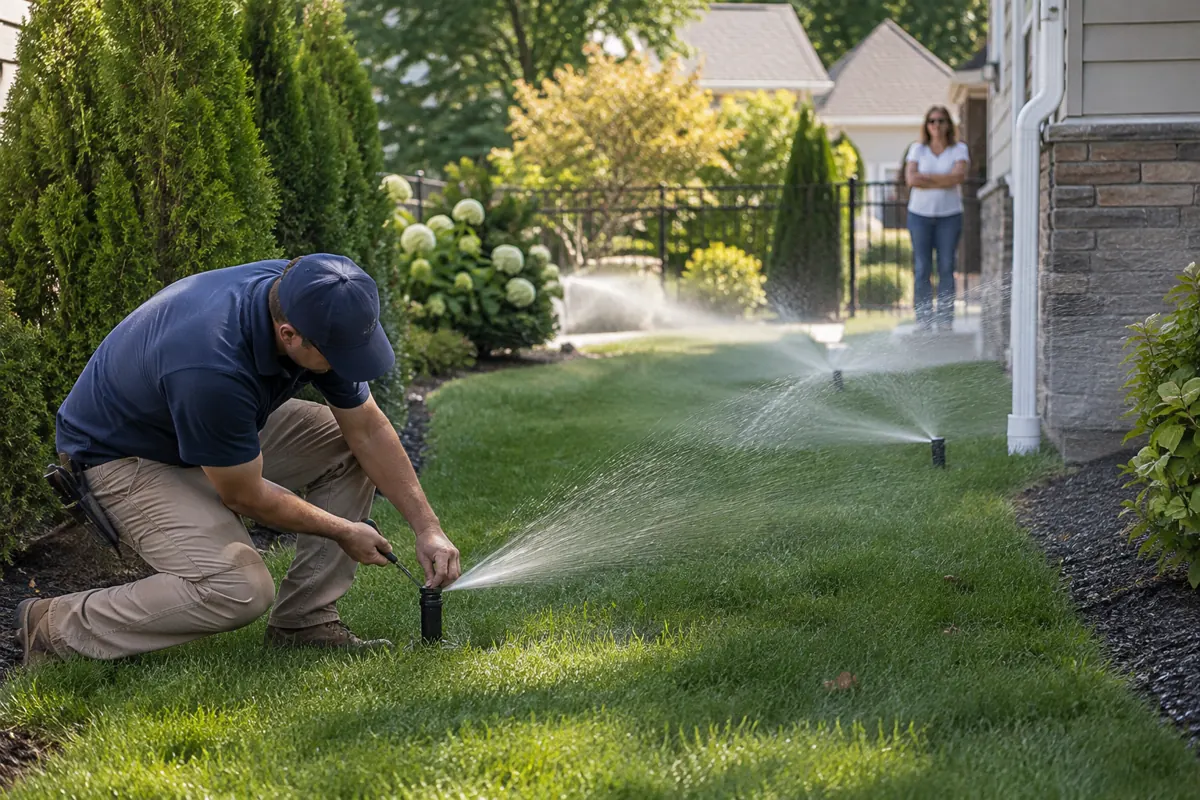
A mid-summer tune-up can identify shifted heads, sticking valves, leaks, and controller settings that need adjustment. Heads shift after mowing, valves stick, and controllers drift out of sync with actual rainfall. Catching those issues during the growing season can limit water waste and landscape damage.
- Spring startup: pressurize the system, check for winter damage, confirm zones are working
- Summer tune-up: adjust heads, check for leaks, review controller settings against actual rainfall
- Fall winterization: blow out lines, drain backflow devices, shut down before the first hard freeze
Commercial sites with larger zone counts, heavier water use, or strict landscaping standards often benefit from more frequent visits. See our Commercial Irrigation System Design page for how site size and use typically shape a service schedule.
What’s Usually Included in a Maintenance Agreement?
Plans vary by provider, but a solid irrigation maintenance agreement generally covers the mechanical and operational basics of the system, not just a quick walk-through. Here is what a typical plan includes across its scheduled visits.
| Service Item | When It Happens | Why It Matters |
|---|---|---|
| Backflow preventer inspection | Spring startup | New Jersey’s Uniform Construction Code assigns code-inspection responsibility for the backflow preventer to the plumbing subcode official; the device helps prevent contamination of the potable water supply |
| Zone-by-zone system test | Every visit | Confirms each valve and head is firing correctly and covering its intended area |
| Head cleaning and adjustment | Spring and summer | Clogged or misaligned heads waste water and leave dry patches on clay soil that already drains unevenly |
| Rain sensor or smart controller check | Spring startup | New Jersey law (C.52:27D-123.13) requires systems installed after September 8, 2000 to have a working automatic rain sensor or smart sprinkler |
| Leak detection | Summer tune-up | Early detection avoids water loss and erosion around foundations and hardscape |
| Full winterization blowout | Fall | Removes water from lines before freeze-thaw cycles can crack pipes and fittings |
If a visit turns up a broken head, a stuck valve, or a failed zone, that typically becomes a separate repair rather than something absorbed into the plan. Our Sprinkler Repair & Troubleshooting Services page covers how those fixes are usually scoped and billed.
Residential vs. Commercial Maintenance Plans
Residential and commercial irrigation maintenance agreements share the same core structure, but scale and risk tolerance differ quite a bit. A single-family home’s system can have different maintenance needs than a larger retail plaza or office park serving planting beds, turf, and street frontage.
Residential plans
These are usually built around the standard spring-summer-fall cycle, sized to the home’s zone count. Homeowners in Hackensack, Ridgewood, Paramus, and Saddle Brook may consider a plan to keep seasonal startup, inspections, and winterization on a regular schedule.
Commercial plans
Commercial properties carry more exposure if irrigation fails. A broken main on a retail property can flood a parking lot or walkway, creating a liability issue on top of a landscaping one. Commercial agreements typically call for more frequent inspections, documented visit records for property management, and closer attention to water use given rising utility costs. Our commercial irrigation, drainage and lighting services page outlines how these larger systems are typically structured.
Why North Jersey’s Soil and Climate Make Maintenance Plans Worth It
Bergen, Passaic, Morris, and Essex counties sit on a mix of clay-heavy and compacted soils that drain slowly after heavy spring and fall rain. Slow-draining or compacted soil can contribute to pooling in low spots, which may obscure signs of an irrigation leak.
Then winter arrives. Water left in vulnerable irrigation components can expand when it freezes, potentially cracking pipes, valves, or fittings. These conditions make seasonal inspection and proper winterization especially important in North Jersey.
Plan pricing varies with system size, zone count, visit frequency, and the services included. Actual costs depend on factors such as zone count, system condition, site conditions, and the services included. A free on-site estimate is the most accurate way to see what a plan would cost for a specific property.
How Maintenance Plans Fit with Smart Controllers and Water Rules
New Jersey requires any automatic lawn sprinkler system installed after September 8, 2000 to have a working automatic rain sensor or a smart sprinkler, according to state statute C.52:27D-123.13. A maintenance visit is the natural time to confirm that device is still functioning, since sensors can fail or get knocked loose without an obvious sign.
Systems with an older timer-based controller often benefit from pairing a maintenance plan with a controller upgrade. Weather-based controllers can adjust watering using local weather data, while compatible rain or soil-moisture sensors can provide additional input that may help reduce unnecessary watering and runoff. A controller retrofit can often be integrated with an existing irrigation system after compatibility and wiring are evaluated.
It is also worth noting the limits of a maintenance plan. Routine service may cover inspection, calibration, and seasonal preparation, but suspected main-line breaks, code issues, or construction damage should be evaluated by a properly certified landscape irrigation contractor. N.J.A.C. 7:62 contains rules of New Jersey’s Landscape Irrigation Contractors Examining Board, including certification requirements for landscape irrigation contracting.
How to Choose the Right Maintenance Plan
Not every plan fits every property, and the cheapest option is not always the best value once you account for repair discounts, priority scheduling, and how thorough the inspection actually is. Here is a simple way to compare plans before signing anything.
- Confirm exactly how many visits are included per year and what triggers an extra charge
- Ask whether backflow testing and rain sensor checks are part of the base plan or billed separately
- Check if repair work found during a visit comes with a discounted rate
- Ask how winterization timing is determined, since an early or late freeze can shift the schedule
- Review whether the plan covers drainage issues around the irrigation system, or only the sprinkler components themselves
That last point matters more than homeowners expect. Irrigation and drainage problems are often connected, since a yard that cannot shed water properly will also stress the irrigation system’s components. Our irrigation and lighting maintenance services page covers how these pieces are handled together, including drainage, as part of a fuller maintenance approach.
Getting Started with a Maintenance Agreement
If a property has never had a formal maintenance plan, the easiest starting point is a single spring startup or full inspection to establish a baseline. That visit typically reveals whether the system has existing leaks, a failing backflow device, or outdated components, information that should shape whatever plan gets set up afterward.
Elite Irrigation & Drainage serves homeowners and businesses across Bergen, Passaic, Morris, and Essex counties, including Hackensack, Ridgewood, Paramus, and Saddle Brook. You can review examples of past work in our project gallery or browse our FAQs and guides for more background on system care.
To ask about maintenance options or request a free on-site estimate, submit a service request.
Frequently Asked Questions
Can I cancel an irrigation maintenance plan mid-season?
Cancellation terms vary by contractor and agreement. Ask about cancellation policy before signing, since some plans bill per visit while others require a seasonal commitment. Always get the cancellation terms in writing as part of the contract.
Does a maintenance plan cover repairs if something breaks?
Typically not fully. Maintenance plans cover inspection, cleaning, and seasonal prep, while parts and labor for broken heads, valves, or pipes are usually billed separately, often at a discounted rate for plan members. Confirm what counts as routine service versus a chargeable repair before enrolling.
Is a maintenance plan worth it for a small residential system?
For a smaller residential system, a plan covering spring startup and fall winterization may be sufficient, depending on system condition, site needs, and the services included. Adding a mid-season tune-up costs more but can catch issues before they damage the lawn or landscaping.
What happens if I skip winterization one year?
Skipping winterization in a region with hard freezes risks water trapped in lines expanding and cracking pipes, valves, or backflow devices. Because freezing water can damage pipes, valves, fittings, and backflow components, annual winterization is an important preventive step in cold climates.
Do commercial properties need a different type of plan than homes?
Commercial systems generally have more zones, higher water use, and greater liability if a failure floods a parking lot or walkway. Commercial properties may need more frequent inspections or service documentation based on system size, site use, and property-management requirements.
Sources
- New Jersey Construction Code Communicator, Spring 2025 (NJ Dept. of Community Affairs)
- New Jersey P.L.2023, c.299 (Automatic Rain Sensors and Smart Sprinklers)
- N.J.A.C. 7:62 Landscape Irrigation Contractors Rule (NJDEP)
- How Much Does an Irrigation Inspection Cost? (Angi)
Ready to Get Started?
If you are considering a new sprinkler system, need help with a drainage problem, or want to brighten your property with landscape lighting, the team at Elite Irrigation & Drainage is ready to help. Call us at 862-899-7122 or visit our contact page to request a free estimate.
Written by the team at Elite Irrigation & Drainage, a North Jersey irrigation, drainage and landscape lighting company in Saddle Brook serving Bergen, Passaic, Morris and Essex counties.