Quick answer: Sprinkler winterization uses compressed air to force leftover water out of pipes, valves and heads before the first hard freeze, preventing cracked pipes and burst valves. Published national estimates place professional blowout costs at about $75 to $250, depending on the system and number of zones; schedule service before sustained freezing temperatures reach North Jersey.
Key takeaways
- Trapped water left in irrigation pipes can freeze, expand, and crack pipes, valves, and sprinkler heads once temperatures drop below freezing.
- A proper blowout uses high air volume and low pressure, not a shop compressor, because industrial units move far more air without over-pressurizing the system.
- Angi reports professional winterization typically runs $56 to $137, while full blowout service can range $75 to $250 depending on zones and equipment.
- North Jersey’s seasonal freezing conditions make it important to winterize before sustained freezes arrive.
- New Jersey law requires certain automatic sprinkler systems to have an operational rain sensor or smart sprinkler, which should also be checked before shutdown.
Why Does a Sprinkler System Need to Be Winterized?
Irrigation lines may be installed shallow enough to remain vulnerable when freezing conditions reach the surrounding soil. When water left inside pipes, valves, and sprinkler heads freezes, it expands and can crack fittings, split PVC pipe, and ruin backflow preventers and valve diaphragms.
This damage is not always obvious right away. Many homeowners do not discover a cracked pipe or a split valve until they run their first irrigation cycle in spring, and by then the fix often costs far more than preventive winterization would have.
Elite Irrigation & Drainage provides fall winterization for residential and commercial systems throughout Bergen, Passaic, Morris, and Essex counties.
How Does the Sprinkler Blowout Process Work?
A blowout uses compressed air to push residual water out of the mainline, lateral pipes, valves, and sprinkler heads. According to a winterization guide from K-Rain, a major sprinkler equipment manufacturer, this air-blowout method is the only way to reliably confirm that water has been removed from every part of the system.
The general steps look like this:
- Shut off the main water supply to the irrigation system.
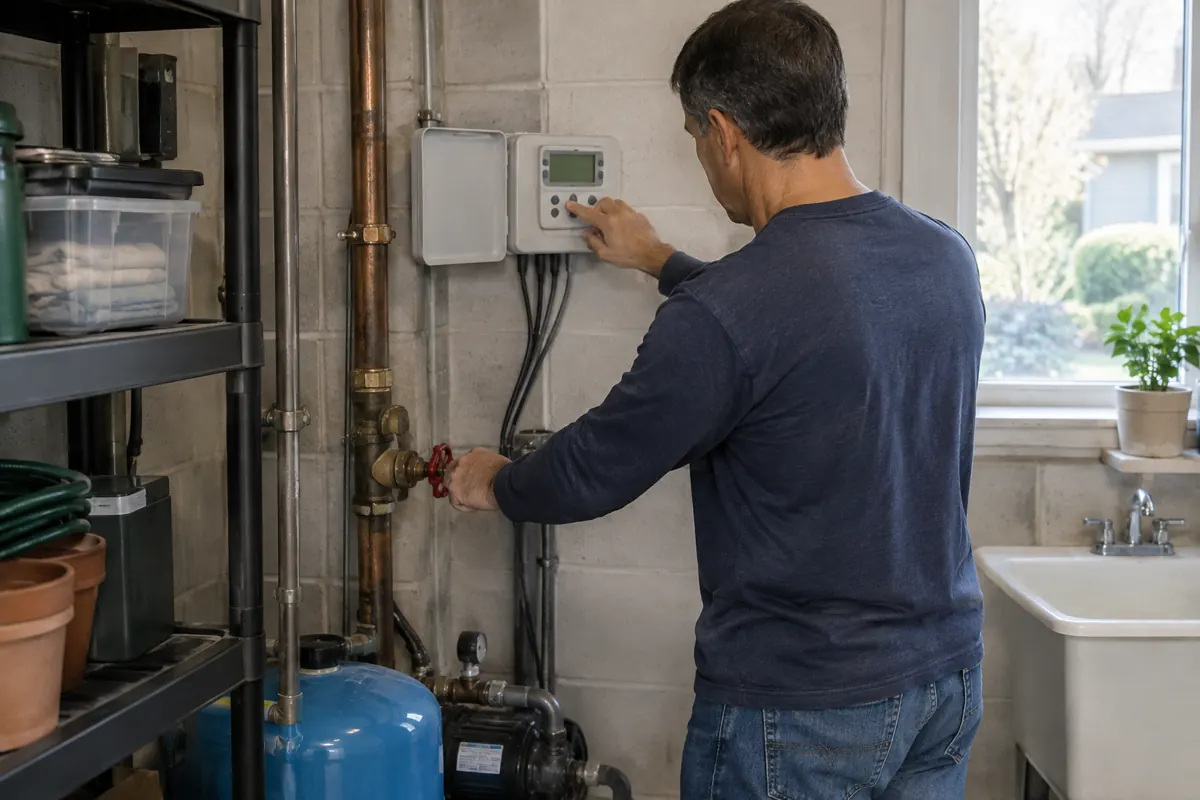
- Connect an air compressor to the system’s blowout port, typically located after the backflow preventer.
- Open and clear each zone individually, stopping once the discharge becomes a fine mist rather than continuing to run air through dry components.
- Drain the backflow preventer and any low points that could still hold water.
- Set the controller to its off or rain mode for the season and follow the manufacturer’s instructions on whether to disconnect power.
Equipment matters here. K-Rain’s guidance specifies that a compressor should deliver 20 to 25 cubic feet per minute (CFM) of air volume while keeping pressure at or below 50 psi, using a pressure-regulating valve to prevent spikes. The compressor must provide enough air volume for the system while a regulator keeps pressure within the equipment manufacturer’s limit; a small shop compressor may not provide adequate volume.
This is the main reason DIY winterization is risky. A small compressor run at high pressure to compensate for low volume can blow apart fittings, crack heads, or damage valve diaphragms, the opposite of what winterization is supposed to prevent.
Can I Winterize My Own Sprinkler System?
Some homeowners with simple, single-zone systems and the right equipment do attempt a DIY blowout. HomeAdvisor estimates that renting an air compressor costs $30 to $60 per day, but renters still need to verify that the unit provides suitable airflow and pressure regulation for their system.
The bigger issue is pressure control. Exceeding 50 psi during a blowout can damage pipes and seals, according to HomeAdvisor, and a rented compressor must be checked for suitable airflow and fitted with proper pressure regulation before use. If you are not confident you can keep air volume high and pressure low throughout the process, it is worth calling a licensed irrigation professional instead.
Multi-zone systems, backflow preventers, drip zones, and smart controllers add complexity that makes professional service the safer choice for most properties. Elite Irrigation & Drainage can evaluate your setup and handle the blowout with equipment sized for the job; you can submit a service request to get on the fall schedule.
What Does Sprinkler Winterization Cost?
Winterization pricing depends mainly on system size, number of zones, and the type of drainage your system uses. National cost data gives a useful range to budget against, though actual pricing always depends on your specific system and local provider.
| Factor | Typical Range | What Drives the Cost |
|---|---|---|
| Basic winterization service | $56–$137 (Angi average $93) | System size, zone count, local labor rates |
| Full air-blowout service | $75–$250 | Compressor equipment needed, number of zones, backflow work |
| Additional zones beyond standard coverage | $10–$20 per zone | Extra time required to clear each zone individually |
| DIY compressor rental | $30–$60 per day | Rental company, compressor CFM rating, rental duration |
These figures come from Angi and HomeAdvisor’s published cost guides and are presented as typical or estimated ranges, not quotes from any specific company. Larger properties, commercial sites with more zones, or systems needing backflow or valve repairs during the visit will land toward the higher end.
When Should You Winterize Your Irrigation System in North Jersey?
Timing matters more in North Jersey than in milder climates because of how quickly the ground can freeze once overnight temperatures drop. The safest approach is to schedule winterization before the first hard freeze, generally sometime in mid-to-late fall, rather than waiting for a cold snap to force the issue.
Waiting too long is a common and costly mistake. Once a freeze hits, any water still sitting in the pipes is already at risk, and a rushed blowout after the ground has started to freeze is harder to schedule and more stressful than planning ahead.
Because fall is a high-demand season for every irrigation contractor in the region, booking early also helps you avoid being squeezed into the last openings before winter. If your property is in Hackensack, Ridgewood, Paramus, Saddle Brook, or elsewhere in Bergen, Passaic, Morris, or Essex counties, it is worth getting on a contractor’s calendar well before the forecast turns cold.
What Should Be Included in a Professional Winterization Visit?
Not every winterization service covers the same ground. A thorough visit should include more than just blowing air through the pipes. Use this checklist to compare what a provider offers:
- Shutting off and draining the main water supply
- Air blowout of every zone with properly sized, pressure-regulated equipment
- Draining or protecting the backflow preventer
- Inspection of valves, heads, and visible pipe for existing damage
- Controller shutdown or switch to rain/off mode for the season
- Notes on any repairs needed before spring startup
This last point matters because winterization is also a good opportunity to catch small problems, a leaking valve, a cracked head, a wiring issue, before they turn into bigger repairs. If a technician flags an issue during the fall visit, it is usually far cheaper to address it then than to discover it mid-season next year. For significant or recurring issues, Elite Irrigation & Drainage’s sprinkler repair and troubleshooting services can handle the fix.
How Does Winterization Fit Into Year-Round System Care?
Winterization is one half of the seasonal cycle; the other is the spring restart. Systems that are properly blown out in the fall need a corresponding spring sprinkler startup and inspection to safely repressurize the system, check for winter damage, and recalibrate the controller for the new season.
Property owners who want to avoid tracking seasonal timing themselves often bundle winterization and spring startup into a broader service plan. Elite Irrigation & Drainage’s irrigation and lighting maintenance services cover both seasonal transitions along with routine checkups during the growing season, which helps catch small issues before they become expensive ones.
It is also worth noting New Jersey’s rain sensor law. Under P.L.2000, c.107 as amended, automatic lawn sprinkler systems installed after September 8, 2000 must have an operational automatic rain sensor or a smart sprinkler. P.L.2023, c.299 also directs that, no later than three years after its effective date, sale contracts for properties with certain older operable systems include a rain-sensor or smart-sprinkler provision. Fall and spring visits are a natural time to confirm this component is present and functioning, since it affects both compliance and water efficiency.
Residential vs. Commercial Winterization: What’s Different?
The core blowout process is similar for homes and commercial properties, but scale and water-use rules can change the scope of work. Commercial sites often have more zones, larger backflow assemblies, and stricter requirements around backflow testing and documentation.
Backflow testing and documentation requirements can vary by assembly and local water provider, so commercial property managers should confirm the rules that apply to their site separately from scheduling a winterization blowout.
Elite Irrigation & Drainage supports both residential customers and businesses across North Jersey, and our commercial irrigation, drainage and lighting services cover the added complexity that comes with larger sites.
Frequently Asked Questions
How long does a sprinkler blowout take?
A typical residential blowout takes 15 to 30 minutes, according to Angi, depending on the number of zones and the system’s complexity. Larger properties or commercial sites with more zones and a bigger backflow assembly can take longer, especially if the technician also inspects valves and heads for damage during the visit.
What happens if I forget to winterize my sprinkler system?
Water left in pipes, valves, or sprinkler heads can freeze and expand once temperatures drop, often cracking PVC pipe, splitting valve diaphragms, or damaging the backflow preventer. These issues frequently are not discovered until spring startup, when the repair bill is usually higher than a routine fall blowout would have cost.
Can I winterize a drip irrigation system the same way?
Drip irrigation lines also need water removed before freezing weather, though the process can differ slightly from standard spray zones depending on emitter type and layout. If your property has drip lines for garden beds or plantings alongside traditional zones, mention that when scheduling so the technician can address both systems properly.
Does winterization include smart controller settings?
A thorough winterization visit should include powering down or switching the controller to an off or rain mode for the season, and checking that any rain sensor or smart sprinkler is functioning. New Jersey law requires an operational rain sensor or smart sprinkler on many automatic systems, so this is worth confirming each fall.
How do I know if my sprinkler system already has freeze damage?
Common signs include water pooling around a valve box after the ground thaws, a cracked or missing sprinkler head, or low pressure in one zone during spring startup. A professional inspection during startup or a mid-season check is the most reliable way to catch freeze damage before it gets worse.
Sources
- Winterize Your Sprinkler System (K-Rain)
- How Much Does It Cost to Winterize a Sprinkler System? (Angi)
- How Much Does It Cost to Winterize or Activate a Sprinkler System? (HomeAdvisor)
- How to Hire a Sprinkler Winterization Service (Angi)
- New Jersey Chapter 299 – Automatic Rain Sensors and Smart Sprinklers
Ready to Get Started?
If you are considering a new sprinkler system, need help with a drainage problem, or want to brighten your property with landscape lighting, the team at Elite Irrigation & Drainage is ready to help. Call us at 862-899-7122 or visit our contact page to request a free estimate.
Written by the team at Elite Irrigation & Drainage, a North Jersey irrigation, drainage and landscape lighting company in Saddle Brook serving Bergen, Passaic, Morris and Essex counties.