Quick answer: Sprinkler repair addresses broken heads, leaks, valve failures, and controller issues that can waste water and damage lawns; pricing depends on the failed component, access, labor, and required parts. Elite Irrigation & Drainage diagnoses and repairs these problems for homeowners and businesses across Bergen, Passaic, Morris, and Essex counties.
Key takeaways
- Sprinkler repair costs vary based on the failed component, access, required parts, labor, and season.
- Clay-heavy soil, freeze-thaw movement, and water left in irrigation lines can contribute to cracked pipes, damaged heads, and valve problems.
- The EPA’s WaterSense program notes that systems with timer-controlled irrigation can use about 50 percent more water outdoors than homes without them, and leaks make that worse.
- Soggy patches, sudden water bill spikes, and heads that spray sideways usually signal a leak or broken head rather than a minor settings issue.
- DIY fixes may work for simple head swaps, but buried leaks, valve failures, and wiring problems are better left to a business that employs a certified Landscape Irrigation Contractor.
What Causes Most Sprinkler Problems in North Jersey?
North Jersey’s clay-heavy soil can drain slowly and shift as moisture and temperature conditions change, potentially stressing buried pipes and fittings. When that soil freezes and thaws repeatedly through late fall and early spring, it shifts and heaves, cracking pipe joints and snapping sprinkler heads that were perfectly fine the season before.
Heavy spring and fall rainfall adds another layer of stress. Saturated ground can cause valve boxes to flood, electrical connections to corrode, and backfill around pipes to settle unevenly, which stresses fittings at the worst possible angle. Lawnmowers, foot traffic, and aggressive edging can also damage sprinkler heads and risers across Bergen, Passaic, Morris, and Essex counties.
Most of these issues are preventable with routine inspection, which is part of why ongoing irrigation and lighting maintenance pays off over time instead of waiting for a visible failure.
Common Sprinkler Problems and What They Mean
Not every irrigation issue looks the same, and the symptom you notice often points to a specific part of the system. Here is a quick reference to common symptoms and possible causes.
| Symptom | Likely Cause | Urgency |
|---|---|---|
| Broken or sheared-off sprinkler head | Lawnmower impact, freeze-thaw heaving, or old brittle plastic | Moderate – fix before next watering cycle |
| Water pooling or soggy patch in the lawn | Underground pipe leak or cracked fitting below the surface | High – can erode soil and waste significant water |
| Zone will not turn on | Faulty valve, wiring break, or controller programming error | Moderate to high depending on season |
| Low pressure across multiple heads | Main line leak, clogged filter, or partially closed valve | High – often signals a bigger leak |
| Sprinkler sprays driveway or siding | Head misaligned, tilted, or wrong nozzle installed | Low – adjust but address promptly to avoid waste |
| Unusually high water bill | Hidden leak in the main line or a valve not closing fully | High – call for leak detection |
The U.S. Environmental Protection Agency’s WaterSense program notes that a missing or broken sprinkler head can be hard to spot because most systems run overnight or early morning, which is exactly why a visible wet spot or dead patch of grass deserves a closer look.
How to Troubleshoot a Sprinkler System Step by Step
Before assuming the worst, walk through these steps during a scheduled daytime run of each zone. The EPA’s WaterSense Sprinkler Spruce-Up checklist recommends this zone-by-zone approach to catch problems that are easy to miss at night.
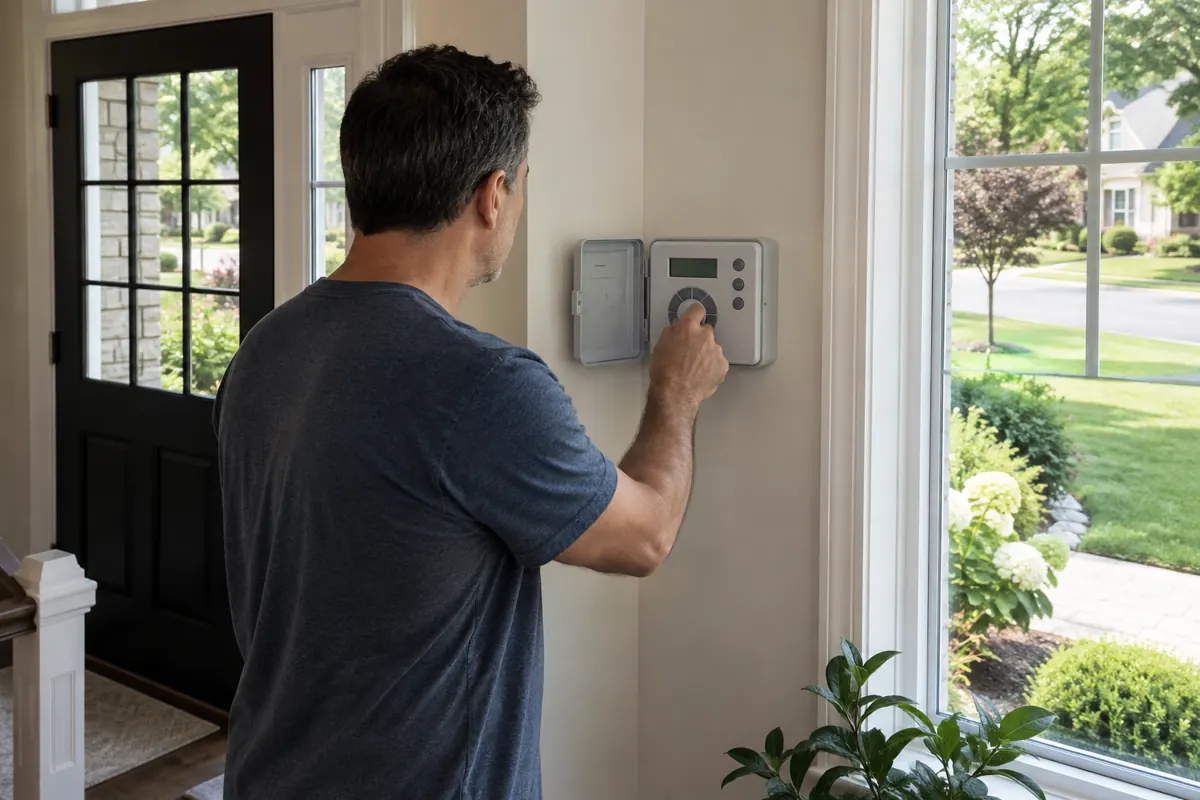
- Turn on each zone manually at the controller and walk the area while it runs.
- Watch for heads that do not pop up fully, spray at odd angles, or stay stuck down.
- Flag any broken or tilted heads so you can find them again after the water is off.
- Check for pooling water between cycles, which often signals an underground leak rather than surface overspray.
- Open valve boxes and look for loose connections, corrosion, or valves that will not close completely.
- Confirm sprinklers are aimed at the lawn and plant beds, not the driveway, sidewalk, or house siding.
- Note any zones with noticeably lower pressure than the rest of the system.
If you find a problem you can reach and see clearly, such as a cracked head sitting above ground, a DIY swap is often reasonable. If the problem is a buried leak, a valve that will not shut, or wiring you cannot trace, that is the point to call a professional rather than dig blind.
DIY Fixes vs. When to Call a Professional
Plenty of small sprinkler issues are within reach of a handy homeowner. Others carry real risk of making the problem worse or running up a water bill while you figure it out.
Safe to try yourself
- Replacing a visibly cracked or sheared sprinkler head with a matching model.
- Re-aiming a head that is spraying the wrong direction.
- Clearing debris from a clogged nozzle.
- Resetting or reprogramming a controller after a power outage.
Better left to a licensed irrigation professional
- Diagnosing an underground leak you cannot see or access safely.
- Repairing or replacing a solenoid valve or wiring inside a valve box.
- Locating a break in a main supply line under a driveway or patio.
- Any repair involving the backflow prevention device, which often has local code requirements.
New Jersey also regulates who can legally perform irrigation work. According to the New Jersey Department of Community Affairs, a business that performs landscape irrigation construction, repair, or alteration must employ a certified Landscape Irrigation Contractor, and a general home improvement contractor license does not substitute for that certification. That is worth asking about before you hire anyone for repair work.
What Does Sprinkler Repair Cost?
Repair costs vary with the part involved, how accessible it is, and the time of year. Sprinkler repair costs vary with the failed component, system accessibility, required parts, labor, and time of year.
Several things push a repair toward the higher end of that range:
- Repairs that require excavation to reach a buried pipe or main line leak.
- Emergency or after-hours callouts, especially during the first hard freeze or heavy rain event.
- Valve or wiring repairs that require opening and diagnosing an entire zone.
- Replacement parts for older or discontinued system brands that are harder to source.
These figures are general industry estimates, not a quote from Elite Irrigation & Drainage. For property-specific pricing, request a free on-site estimate from Elite Irrigation & Drainage.
Leak Detection: Finding the Problem You Cannot See
Leaks are often the most expensive sprinkler problem because they waste water quietly for weeks before anyone notices. The EPA’s WaterSense program points out that leaks commonly occur at the joints between sprinkler heads and piping, and that too much water pressure or debris in the line can make leaking worse over time.
Signs worth investigating include a water bill that jumps without an obvious reason, a patch of lawn that stays green and spongy while the rest dries out, or a valve box that is wet even when the system is off. Checking that valves close completely is part of this process, since a valve that will not fully shut lets water seep through the system around the clock.
In North Jersey’s clay soil, surface pooling does not always show up directly above the leak, since water can travel along the denser soil layer before it surfaces. This is one of the main reasons DIY leak detection has limits, and a professional with pressure-testing tools can usually pinpoint the source faster and with less digging.
Emergency Sprinkler Repair: What Counts as Urgent
Not every broken sprinkler head is an emergency, but a few situations are worth addressing right away rather than waiting for a routine appointment.
- A main line break that is flooding a lawn, driveway, or foundation area.
- A valve stuck open that keeps running water even after you shut off the controller.
- Water pooling near a foundation, which can contribute to the same drainage stress covered in our drainage solutions guide.
- A sudden, large spike in your water bill with no other explanation.
If you are dealing with one of these, shutting off the system at the main control valve stops the immediate water loss while you arrange for a repair visit. For issues such as a single misaligned head or weak pressure in one zone, a scheduled visit may be appropriate if you can shut off the irrigation system and there is no active flooding. Elite Irrigation & Drainage is available Monday through Friday from 8 a.m. to 5 p.m., with Saturday appointments available on request, to help North Jersey property owners sort out which category their problem falls into.
How Repair Fits Into Seasonal Irrigation Care
Repair work is often most necessary right at the start and end of the watering season, which is why it pairs naturally with seasonal service. A spring startup inspection is typically when freeze damage from winter first shows up, since a system that sat idle for months can reveal cracked heads or stuck valves the moment it is pressurized again.
In the fall, a proper winterization and blowout service clears water from the lines before the first hard freeze, which is one of the most effective ways to prevent the very freeze-thaw damage described earlier in this guide. Skipping winterization can increase the risk of freeze damage and spring repair needs.
New Jersey state law also requires that automatic lawn sprinkler systems installed after September 8, 2000 include an operational automatic rain sensor or a smart sprinkler controller, according to New Jersey legislation (P.L.2023, c.299). A malfunctioning sensor or outdated controller can sometimes look like a system fault when it is really a compliance or upgrade issue worth discussing with a professional.
If repairs are becoming frequent, consider ongoing irrigation maintenance to identify developing problems earlier.
Frequently Asked Questions
How do I know if my sprinkler system has a leak?
Common signs include an unexplained jump in your water bill, a patch of lawn that stays wet or unusually green compared to the rest, low pressure across multiple zones, and a valve box that stays damp even when the system is off. If you notice any of these, a professional leak detection visit can confirm the source without unnecessary digging.
Can I repair a broken sprinkler head myself?
Yes, if the head is visible and accessible, you can often unscrew the damaged head and replace it with a matching model from a hardware store. Make sure the system is off before you start, and confirm the new head matches the spray pattern and flow rate of the others on that zone.
Why is only one zone on my sprinkler system not working?
A single dead zone usually points to a faulty solenoid valve, a wiring break between the controller and that valve, or a programming error in the controller itself. Because diagnosing wiring issues inside a valve box can be tricky, this is a common point where homeowners call in a professional.
Does New Jersey require a license to repair sprinkler systems?
Yes. According to the New Jersey Department of Community Affairs, businesses performing irrigation repair, construction, or alteration must employ a certified Landscape Irrigation Contractor, and a general home improvement contractor license does not meet that requirement.
How much does it typically cost to fix a sprinkler system?
Sprinkler repair costs depend on the failed component, access, excavation needs, required parts, labor, and season. Request a property-specific estimate before authorizing the work.
Should I repair my old sprinkler system or replace it?
If repairs are becoming frequent or essential parts are no longer available, replacement may be more practical over the long term; a missing or inoperative rain sensor may instead require a sensor or smart-sprinkler upgrade. A straightforward head or valve repair on an otherwise sound system usually makes more sense than a full redesign.
Sources
- EPA WaterSense: Sprinkler Spruce-Up
- This Old House: A Simple Guide to Repairing Your Home’s Irrigation System
- New Jersey Department of Community Affairs: Landscape Irrigation Contractors
Ready to Get Started?
If you are considering a new sprinkler system, need help with a drainage problem, or want to brighten your property with landscape lighting, the team at Elite Irrigation & Drainage is ready to help. Call us at 862-899-7122 or visit our contact page to request a free estimate.
Written by the team at Elite Irrigation & Drainage, a North Jersey irrigation, drainage and landscape lighting company in Saddle Brook serving Bergen, Passaic, Morris and Essex counties.