
Quick answer: Spring sprinkler startup is the process of safely restoring water pressure, inspecting valves and heads, and reprogramming the controller after winter so a system runs leak-free and efficiently. The time required varies by system, but startup can reveal freeze damage before peak watering season.
Key takeaways
- HomeAdvisor estimates professional sprinkler activation at about $40 to $230, depending on system size, complexity, location, and needed repairs.
- Clay-heavy North Jersey soil holds moisture and shifts during freeze-thaw cycles, which can crack pipes and dislodge heads over winter without obvious outward signs.
- A proper startup restores the water supply gradually, then tests one zone at a time for leaks, damage, and proper operation.
- New Jersey law requires operational automatic rain sensors or smart sprinklers on systems installed after September 8, 2000, with additional phased requirements for certain older systems and properties; checking the device during startup is a sensible maintenance step.
- Catching a cracked pipe or stuck valve during startup can prevent problems during peak summer watering.
What Is Spring Sprinkler Startup and Why Does It Matter?
Spring sprinkler startup is the process of turning your irrigation system back on after winter, inspecting every component along the way, and confirming the system is safe to run unattended for the season. It is not as simple as flipping a valve. Water left in pipes, valves, or backflow devices over a cold North Jersey winter can freeze, expand, and crack fittings that look fine from the outside.
In Bergen, Passaic, Morris, and Essex counties, freeze-thaw cycles are common well into March and sometimes April. Clay-heavy soil in much of the region holds moisture longer than sandy soil, which means buried lines can stay wet and vulnerable to frost movement even after the air warms up. A rushed startup, or skipping one entirely, often means the first sign of trouble is a soggy lawn, a spiking water bill, or a dry patch that shows up weeks later.
The U.S. Environmental Protection Agency’s WaterSense program notes that broken or tilted sprinkler heads can waste significant water and go unnoticed because systems often run overnight or early morning, which is exactly why a hands-on spring inspection matters more than just checking that water comes out.
When Should You Schedule Spring Startup in North Jersey?
Most North Jersey systems are ready for activation once the risk of a hard, sustained freeze has passed and the ground has thawed, once sustained freezing conditions have passed and the ground has thawed; timing varies by year and location. Turning a system on too early, before the ground has fully thawed, raises the odds of cracking a pipe that still has ice trapped inside it.
Demand for startups climbs fast once temperatures warm, so booking early in the season tends to get you a better appointment window than waiting until your lawn is already drying out. If you are planning a brand-new system rather than reactivating an existing one, timing works differently; see our guide on the complete irrigation and sprinkler services guide for installation-specific timing questions.
What Gets Inspected During a Professional Startup?
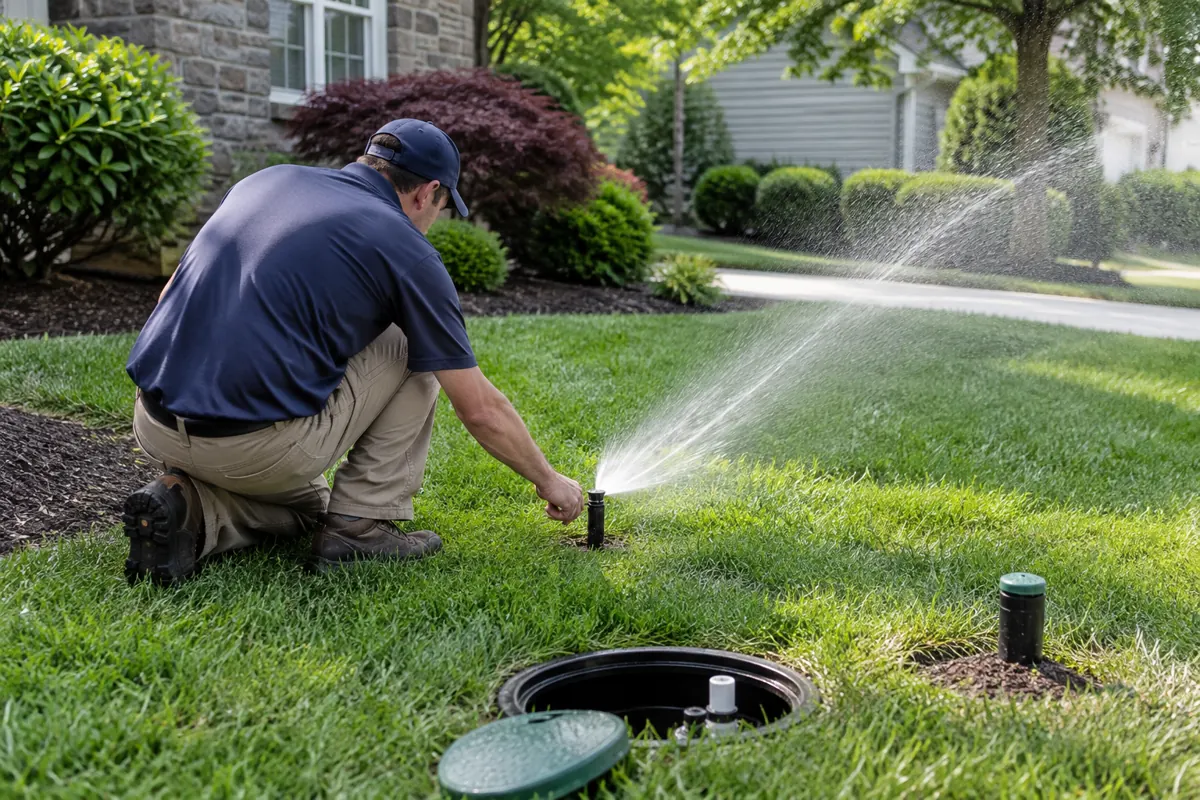
A thorough spring startup covers the whole system, not just the parts that are easy to see. Here is what a professional visit typically includes.
- Backflow preventer check: Inspected for visible damage, leaks, and proper setup; any required certified backflow test may be a separate service.
- Gradual pressure build: Water is introduced slowly to the main line and each zone to avoid pressure surges that can blow apart valves or heads weakened by winter.
- Valve inspection: Each zone valve is checked for proper opening, closing, and sealing so the system does not seep water when it should be off.
- Head-by-head inspection: Every sprinkler head is checked for cracks, tilting, clogging, or misalignment that could send water onto driveways, siding, or sidewalks instead of the lawn.
- Zone-by-zone run test: Each zone is activated individually to confirm even coverage and catch leaks between runs.
- Controller and sensor check: The timer is reprogrammed for the season, and the rain sensor or smart controller is tested to confirm it will override watering after rainfall.
- Pipe and fitting review: Connections are checked for leaks or pooling water, a common sign of an underground break caused by winter freeze movement.
This process lines up closely with the WaterSense inspection checklist from the EPA, which recommends checking for head-to-head coverage, broken or tilted heads, and leaks at valve box connections.
DIY Spring Startup Checklist (and When to Call a Pro Instead)
Homeowners who feel comfortable with basic outdoor plumbing can handle a simplified version of startup, but several steps carry real risk if rushed.
- Walk the yard first and look for any heads that are visibly cracked, sunken, or missing.
- Open the main shutoff valve gradually, following the system manufacturer’s instructions, to let pressure build without a sudden surge.
- Check the backflow preventer area for standing water or obvious damage before pressurizing it.
- Turn on one zone at a time at the controller and watch for sputtering, which is normal as trapped air clears, followed by a steady spray.
- Walk each zone while it runs and flag any head that does not pop up fully, sprays unevenly, or soaks pavement instead of grass.
- Reprogram the controller for spring watering needs and test that the rain sensor or smart controller interrupts a cycle.
- Note any zone with weak pressure, no water at all, or pooling nearby, since these often point to a cracked line underground.
This Old House recommends activating each zone one at a time and allowing trapped air and sputtering to clear before checking for a steady spray. If you find a cracked backflow device, a zone that will not pressurize, or water pooling where it should not be, that is the point to stop and call a qualified irrigation professional rather than keep forcing pressure through a damaged line. Our sprinkler repair and troubleshooting services page covers what happens after a startup turns up a problem.
What Does Spring Startup Cost?
HomeAdvisor estimates professional sprinkler activation at about $40 to $230, with one of its cost guides giving a typical activation range of $40 to $150. The final price depends on a few factors.
| Factor | How It Affects Cost |
|---|---|
| Number of zones | More zones mean more time spent testing coverage and checking valves individually |
| Property size and layout | Larger or more complex layouts take longer to walk and inspect thoroughly |
| System age and condition | Older systems are more likely to have worn seals, brittle pipe, or outdated controllers |
| Repairs found during startup | Broken heads or valve replacements add to the base activation fee, with sprinkler repairs averaging $130 to $420 per HomeAdvisor |
| Backflow testing requirements | Backflow testing requirements vary by water provider and local rules, and required testing may be priced separately from startup |
These figures are general industry estimates, not a quote from Elite Irrigation. Because every yard and system is different, the most reliable way to know your actual cost is a free on-site estimate.
How New Jersey’s Smart Sprinkler Law Affects Your Startup
Under New Jersey law (P.L.2023, c.299), automatic lawn sprinkler systems installed after September 8, 2000 must be equipped with an operational automatic rain sensor or a smart sprinkler that adjusts watering based on weather and soil conditions. The law also phases in requirements for rain sensors or smart sprinklers to be installed as a condition of sale for certain older systems and on specified commercial, retail, and common-interest community properties.
Spring startup is the natural time to confirm your rain sensor or smart controller is actually working, not just present. A sensor that has failed or been bypassed over winter will not override watering after a storm, which wastes water and can violate local ordinances during drought restrictions. If your system still runs on an old mechanical timer, startup season is also a reasonable time to ask about a smart controller upgrade, while the system is already being evaluated for seasonal operation.
How Startup Fits Into a Full-Year Irrigation Plan
Spring startup and fall winterization are really two halves of the same seasonal cycle. Leaving water trapped in vulnerable components over winter can contribute to freeze damage discovered during spring startup. If your system was not professionally blown out last fall, budget extra time for your spring visit in case of cracked components. Our irrigation and lighting maintenance services page explains how startup and winterization work together as a pair rather than as one-off appointments.
Many homeowners also find it simpler to put both visits, plus a midseason check, on an annual plan so nothing gets forgotten between October and April. Elite Irrigation & Drainage offers irrigation and sprinkler services across Bergen, Passaic, Morris, and Essex counties, including Hackensack, Ridgewood, Paramus, and Saddle Brook, including spring startups, fall winterizations, maintenance, and repairs. You can review examples of completed work in our project gallery or learn more about our team on the about us page.
Booking Your Spring Startup
If your system has not run since last fall, the safest approach is a professional startup rather than guessing at your own pace. A technician who walks every zone, tests the backflow preventer, and confirms your rain sensor works can catch a cracked pipe or stuck valve before it turns into a bigger repair or a wasted water bill.
Elite Irrigation & Drainage provides spring startups, seasonal inspections, and free on-site estimates throughout Bergen, Passaic, Morris, and Essex counties, including Hackensack, Ridgewood, Paramus, and Saddle Brook. You can submit a service request online or contact our office at 862-899-7122 to schedule. We’re open Monday through Friday from 8:00 AM to 5:00 PM, with Saturday appointments available by request.
If you are planning ahead for fall, our irrigation and sprinkler system services page covers winterization and blowout service as well, so you can line up both ends of the season in one conversation.
Frequently Asked Questions
How long does a sprinkler startup appointment take?
Appointment length depends on the number of zones, system complexity, and whether the technician finds damage that needs diagnosis. Systems with more zones, older components, or signs of winter freeze damage can take longer.
Can I turn on my sprinkler system myself without a professional?
Yes, if your system is simple and undamaged, but opening valves too quickly or skipping the backflow check can cause pressure damage or miss a hidden leak. Many homeowners do a basic visual walkthrough themselves and call a professional if anything looks off.
What happens if I skip spring startup inspection entirely?
Running a system without inspection risks wasting water through unnoticed leaks or broken heads, overwatering some areas while others stay dry, and missing early signs of freeze damage that get more expensive to repair later in the season.
Does spring startup include winterization from last fall?
No, startup and winterization are separate seasonal services. Startup reactivates the system in spring; winterization (or blowout) clears water from the lines in fall to prevent freeze damage, and both should be done each year.
Is a rain sensor or smart controller required by law in New Jersey?
It depends on the system and property. New Jersey law requires systems installed after September 8, 2000 to have an operational automatic rain sensor or smart sprinkler, and it adds phased requirements for certain older systems and properties.
What is the average cost of a sprinkler startup service?
HomeAdvisor estimates professional activation at about $40 to $230, with one of its cost guides listing a typical activation range of $40 to $150. Repairs found during the visit, such as broken heads or valve issues, add to that base cost.
Sources
- EPA WaterSense: Sprinkler Spruce-Up
- New Jersey P.L.2023, c.299 (Automatic Rain Sensors and Smart Sprinklers)
- HomeAdvisor: Cost to Winterize or Activate a Sprinkler System
- HomeAdvisor: Who Should I Hire to Turn On a Sprinkler System?
- This Old House: How to Turn on a Sprinkler System in the Spring
Ready to Get Started?
If you are considering a new sprinkler system, need help with a drainage problem, or want to brighten your property with landscape lighting, the team at Elite Irrigation & Drainage is ready to help. Call us at 862-899-7122 or visit our contact page to request a free estimate.
Written by the team at Elite Irrigation & Drainage, a North Jersey irrigation, drainage and landscape lighting company in Saddle Brook serving Bergen, Passaic, Morris and Essex counties.