Quick answer: A residential sprinkler design maps your yard into watering zones based on soil type, sun exposure, slope, and water pressure, then matches each zone with the right sprinkler heads and pipe sizing. Good design in North Jersey’s clay soil and variable rainfall prevents runoff, dry patches, and costly rework after installation.
Key takeaways
- A soil and site assessment, not guesswork, should drive zone count and head selection, since North Jersey’s clay-heavy soil absorbs water slowly and is prone to runoff.
- Zones should separate areas by plant type, sun exposure, and slope so turf, shrubs, and garden beds each get the right run time.
- Matching head type (spray, rotor, or drip) to plant and soil conditions reduces wasted water and uneven coverage.
- A water budget that accounts for regional rainfall patterns helps avoid overwatering during wet spring and fall seasons common in North Jersey.
- Angi reports average sprinkler installation costs of about $1,640 to $3,580, but design complexity, zone count, and site conditions change that range significantly.
What Does Residential Sprinkler System Design Actually Involve?
Designing a residential sprinkler system means mapping your property into watering zones, selecting sprinkler heads for each zone, and sizing pipes and valves so the whole system runs on your home’s available water pressure and flow rate. It is the planning step that happens before anyone digs a trench. A good design accounts for your lawn’s shape, slope, soil, sun exposure, and the plants you are watering.
In North Jersey, that planning matters more than in many regions. Clay-heavy soil found throughout Bergen, Passaic, Morris, and Essex counties absorbs water slowly, so poorly designed zones can cause runoff, puddling, or soggy patches near foundations. Heavy spring and fall rainfall adds another variable, since a system designed without seasonal adjustment in mind tends to overwater during wet stretches and underwater during summer dry spells.
At Elite Irrigation & Drainage, design and installation go hand in hand as part of our irrigation and sprinkler system services. If you want a broader overview of how installation projects typically unfold once a design is finalized, our complete irrigation and sprinkler guide covers that process in more depth.
Why Start With a Soil and Site Assessment?
Soil type determines how fast water moves through the ground, and that single factor shapes almost every other design decision. Clay soil, common across much of North Jersey, absorbs water slowly, so irrigation may need to be divided into shorter cycles with soak periods between them rather than applied in one long session that runs off into the street or a neighbor’s yard.
A proper site assessment should look at:
- Soil composition and drainage rate across different parts of the yard
- Slope and grading, since water moves downhill faster than it absorbs on clay
- Sun exposure and shade patterns through the day
- Existing drainage issues, such as areas that already pool water after rain
- Water pressure and flow rate at the outdoor spigot or main line
Angi recommends homeowners measure their water pressure and flow rate before mapping out a system, since both affect how many heads can run per zone. If your property already struggles with standing water or runoff, it is worth addressing that separately. Our drainage solutions page and complete drainage solutions guide cover French drains, grading, and catch basins that often need to be solved before or alongside an irrigation plan.
How Do You Plan Sprinkler Zones?
Zoning is the heart of irrigation design. Each zone is a group of sprinkler heads controlled together, and the goal is to group areas that share similar water needs so you are not overwatering a shaded corner just to satisfy a sunny stretch of lawn on the same line.
Common zoning principles
- Separate front yard from back yard, since sun exposure and traffic patterns usually differ.
- Group turf areas separately from garden beds, shrubs, and trees, which need deeper, less frequent watering.
- Isolate slopes or low-lying areas prone to runoff so they can run shorter cycles.
- Account for hardscape and shade from structures or mature trees that reduce water needs in that zone.
- Leave room in the plan for future additions, such as a drip line for a new garden bed.
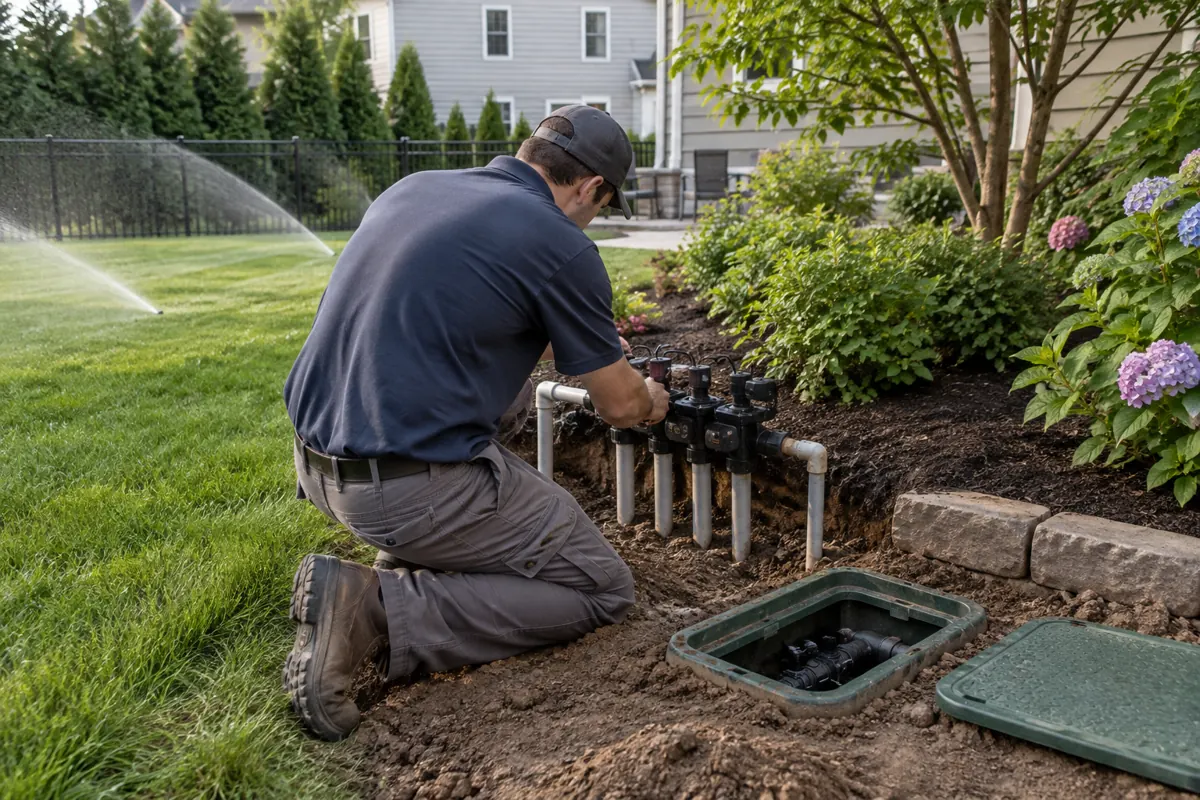
The number of zones varies with yard layout, plant types, sun exposure, slopes, sprinkler type, and available water pressure and flow. Where soil conditions differ across a property, separate zones can allow clay-heavy areas to use cycle-and-soak scheduling without forcing the same schedule on faster-draining areas.
How Do You Choose the Right Sprinkler Heads?
Head selection depends on what is being watered and how much space each zone covers. Choosing the wrong head type is one of the most common reasons a system wastes water or leaves dry patches.
| Head Type | Best For | Typical Coverage | Watch-Outs |
|---|---|---|---|
| Fixed spray heads | Small lawn areas, narrow strips | Up to about 15 feet | Apply water quickly, which can cause runoff on clay soil if run too long |
| Rotor heads | Larger open lawn areas | 15 to 50+ feet | Apply water more slowly and evenly, often better suited to clay soil |
| Drip or micro-irrigation | Garden beds, shrubs, foundation plantings | Targeted, low flow | Needs separate zoning from spray or rotor heads due to different run times |
| Multi-stream rotary nozzles | Mixed shapes, slopes, clay soil | 13 to 30 feet | Slower precipitation rate reduces runoff but may need longer run times |
On sloped or clay-heavy sections, heads or nozzles with lower precipitation rates may reduce runoff compared with higher-rate sprays, provided spacing, pressure, and scheduling are designed correctly. If part of your landscape is mostly garden beds or foundation plantings rather than turf, a dedicated drip zone is usually more efficient; that is a large enough topic that it deserves its own planning conversation.
What Is a Water Budget and Why Does It Matter?
A water budget is an estimate of how much water each zone needs on a weekly basis, based on plant type, soil, sun exposure, and local rainfall patterns. Instead of running every zone on the same fixed schedule, a water budget sets realistic run times that match actual plant demand.
This matters in North Jersey because rainfall is uneven across the year. Rainfall can vary substantially by season and from week to week, with both wet periods and summer dry spells affecting irrigation demand. A system without a water budget approach often overwaters in spring, contributing to the same runoff and saturated-soil problems that clay ground already struggles with, then underwaters in August when the lawn needs it most.
Smart controllers that adjust automatically based on weather data can help apply a water budget without manual adjustment every week, though that is a separate upgrade from the design itself. The design process should still establish baseline run times for each zone so the controller, smart or manual, has an accurate starting point.
What Pipe Sizing and Water Pressure Considerations Matter?
Every zone’s design depends on how much water your home’s supply line can deliver at once, measured as flow rate in gallons per minute (GPM). Too many heads on one zone, or pipe that is undersized for the flow, results in weak coverage at the far end of the line and uneven watering across the yard.
Key factors that affect pipe sizing and zone capacity include:
- Static water pressure at the source, which your water provider can report or which can be measured at an outdoor spigot
- Flow rate available without dropping pressure too low when multiple heads run together
- Pipe diameter and length from the valve to the farthest head in a zone
- Elevation changes, since pressure drops as water is pushed uphill
This is one of the areas where professional measurement makes a real difference, since miscalculating pressure or flow during design often shows up later as weak or uneven spray patterns that are expensive to fix after pipe is already in the ground.
Do You Need a Permit for a Residential Sprinkler System in New Jersey?
Creating a design on paper does not require a construction permit, but installation may involve plumbing permits and code-compliant backflow protection; the local construction office should confirm the requirements for the property. Where backflow protection is required, it helps prevent irrigation water from contaminating the potable water supply; local code and water officials can confirm the required device and installation details.
Because code requirements and local water authority rules vary by town across Bergen, Passaic, Morris, and Essex counties, it is worth confirming permit and backflow requirements before installation begins rather than after the design is finalized. A contractor familiar with local jurisdictions can usually handle that step as part of the project.
DIY Design vs. Hiring a Professional: What Should You Weigh?
Homeowners comfortable with measuring, math, and some trial and error can sketch a basic zone layout themselves. Manufacturers such as Rain Bird and Toro offer worksheets and paid design services that generate a shopping list and zone diagram based on measurements you submit, which can work well for simple, flat, rectangular yards with uniform soil.
Where DIY design tends to fall short is on properties with mixed sun and shade, slopes, irregular shapes, or clay soil that behaves differently than the generic assumptions built into online tools. A professional site visit accounts for the specific conditions of your yard rather than averages.
Angi suggests homeowners hiring a pro ask whether the contractor will measure the property and test water pressure before finalizing a design, and whether the plan will be customized for landscape, soil, and sun exposure rather than using a one-size-fits-all template. Those are reasonable questions to ask any irrigation company, including Elite Irrigation. We provide free on-site estimates for residential sprinkler design and installation throughout Bergen, Passaic, Morris, and Essex counties, including Hackensack, Ridgewood, Paramus, and Saddle Brook. If you have a specific installation project in mind rather than a general design question, our project gallery shows completed work, and you can view our project gallery for examples.
What Happens After the Design Is Finished?
Once zones, head types, and pipe sizing are set, the design becomes the blueprint for installation. Trenching, pipe laying, valve placement, and controller wiring should all follow the plan rather than being improvised on site, since deviations often undo the careful zoning work done earlier.
A finished design also sets up the system for long-term success. Seasonal startups in spring, winterization before freeze-thaw cycles in fall, and routine maintenance all work better when they are built around a system that was designed correctly in the first place, rather than one patched together without a plan. Elite Irrigation handles these ongoing needs through our irrigation and lighting maintenance services, and we are glad to walk through design options as part of a free estimate.
If you are weighing a new system against upgrades to an existing one, or want to understand how irrigation design relates to lighting or drainage work on the same property, our team can go over the options together. Learn more about our background on the about our team and certifications page, or contact our office to start the conversation.
Frequently Asked Questions
How many zones does a typical home sprinkler system need?
There is no fixed zone count for a quarter-acre to half-acre property; the total depends on yard layout, plant types, sun exposure, slopes, equipment, and available water pressure and flow. Front and back lawns are usually separated, and garden beds or drip areas get their own zones since they need different run times than turf.
Do I need a permit to design or install a residential sprinkler system in New Jersey?
You do not need a construction permit simply to draw a plan, but installation may require plumbing permits and code-compliant backflow protection. Check permit and backflow requirements with your local construction office and water provider before work begins.
Can I design my own sprinkler system instead of hiring a professional?
Homeowners can sketch a basic layout, and some manufacturers offer DIY design worksheets or paid planning services. However, clay soil, slopes, and variable water pressure common in North Jersey make professional input valuable for avoiding runoff, uneven coverage, and wasted water.
How much does a residential sprinkler system typically cost?
Angi reports average installation costs of roughly $1,640 to $3,580 depending on lawn size and labor hours, with hourly rates often falling between $50 and $100. Final cost depends on zone count, head type, controller features, and site conditions, so a site visit and written estimate are the only way to get an accurate number.
What is a water budget in irrigation design?
A water budget estimates landscape water demand using factors such as plant type, irrigated area, soil, sun exposure, weather, and system efficiency, then helps establish appropriate schedules for each zone. It helps prevent runoff on clay soil and reduces water waste during wetter spring and fall months.
Should sprinkler zones be different for lawn versus garden beds?
Yes. Turf, shrubs, and garden beds have different root depths and water needs, so mixing them in one zone usually leads to overwatering one area or underwatering another. Separating zones by plant type and sun exposure, and using drip irrigation for beds, gives more precise control.
Sources
- How to Design a Sprinkler System: 7 Tips | Angi
- How To Hire A Sprinkler System Installation Pro | Angi
- Understanding Your Custom Rain Bird Sprinkler Design | Rain Bird
- Sprinkler Planning & Installation Guide | Toro
- New Jersey Department of Community Affairs | Current Construction Codes
Ready to Get Started?
If you are considering a new sprinkler system, need help with a drainage problem, or want to brighten your property with landscape lighting, the team at Elite Irrigation & Drainage is ready to help. Call us at 862-899-7122 or visit our contact page to request a free estimate.
Written by the team at Elite Irrigation & Drainage, a North Jersey irrigation, drainage and landscape lighting company in Saddle Brook serving Bergen, Passaic, Morris and Essex counties.